
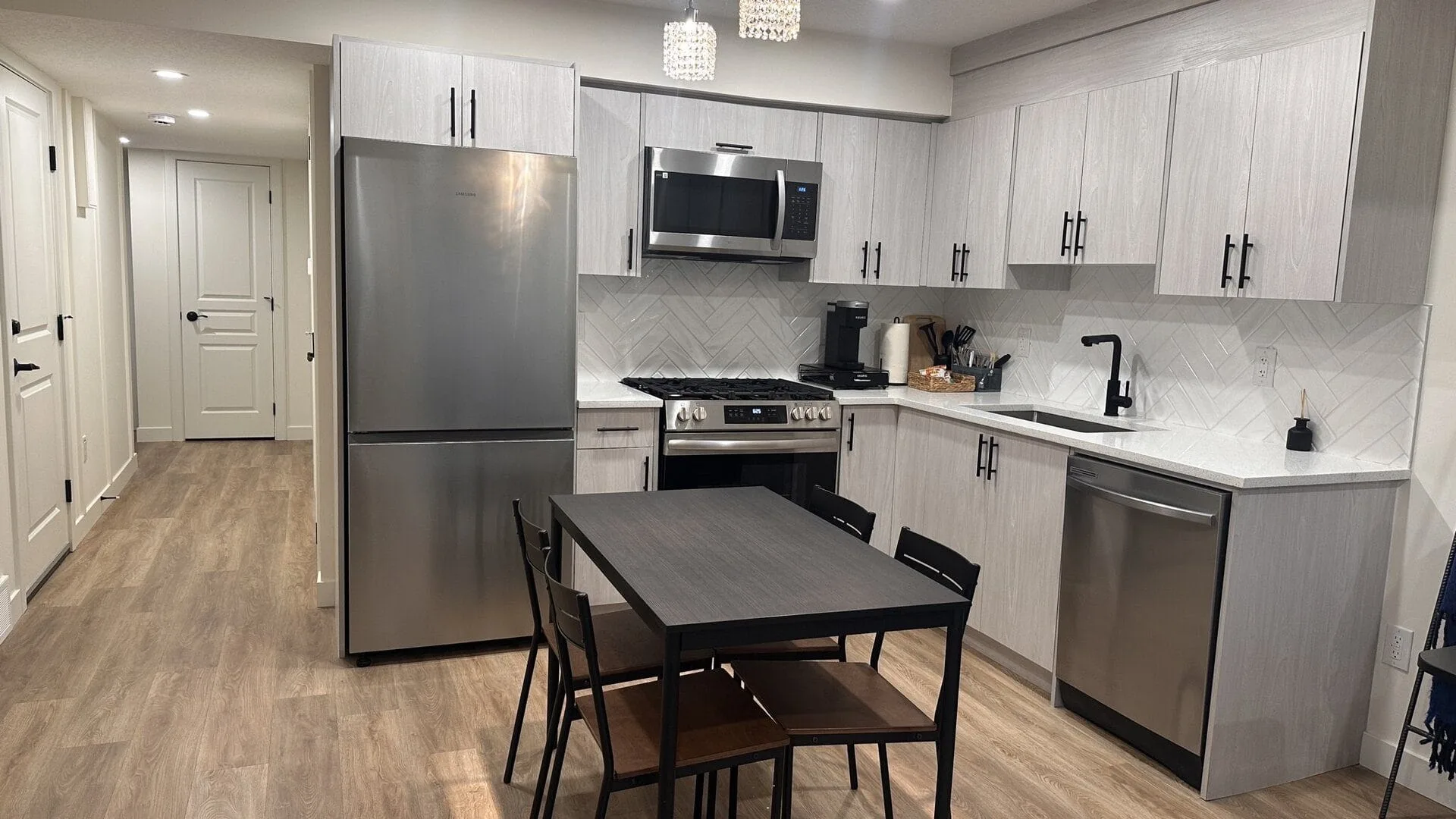
Know what type of suite you have before an unresolved permit or compliance issue creates avoidable costs, lost income, or financing problems.
The 3 Types of Basement Suites in Calgary (And Why It Matters)
Not all basement suites are created equal. Calgary’s building code recognizes three distinct categories, and understanding which one applies to your property is crucial. It’s not just about legality; it affects your property value, rental income, insurance, and resale potential.
In Calgary projects, homeowners can get trapped in the legal gray zone when they do not know which suite category applies. Financing, insurance, resale, and enforcement outcomes depend on the property, documents, lender, insurer, and current City rules, so confirm the actual status before relying on a generic example.
Type 1: Legal Secondary Suite (Code-Compliant)
A legal secondary suite meets all current Calgary Building Code requirements. It has:
- Separate kitchen and bathroom facilities
- Minimum 6’5” ceiling height (habitable rooms)
- Proper egress windows (emergency exits)
- Smoke-tight separation using an approved assembly for the property and permit path
- Dedicated electrical panel
- Proper ventilation and HVAC zoning
- Valid development permit and building permit
- Final inspection sign-off from City of Calgary
A legal suite gives lenders, insurers, appraisers, and buyers clearer documentation to review. Financing, coverage, rental-income treatment, resale, and any incentive eligibility remain subject to the property, counterparty, and current City rules.
Planning range: $75,000 to $130,000 for some Calgary legalization or new-suite scopes, depending on existing conditions. A written property-specific scope is the useful number for a decision.
OAF Experience
Our Calgary legal-suite work starts with the permit and property constraints. Code-compliant documentation can make later conversations with lenders, insurers, and buyers clearer, but each outcome remains property- and counterparty-specific.
Type 2: Non-Conforming Suite (Grandfathered In)
A non-conforming suite was built before current code requirements took effect. Calgary’s rules allow older suites to remain occupied even if they don’t meet today’s standards, as long as they were legal when built.
These typically have issues like:
- Ceiling height below 6’5” (sometimes as low as 6’2”)
- Shared bathroom with main unit
- Insufficient egress windows
- Kitchen that doesn’t fully meet code
- Minimal fire separation
A non-conforming suite may have a different occupancy and financing path than a new application. Confirm the current City record, lender requirements, and insurer position before renting, refinancing, or buying, because:
- work that changes the suite may require current permits and current-code upgrades
- some lenders or insurers may restrict the property based on documentation and risk review
- incentive eligibility is controlled by the current program rules and City approval
- rental income may be treated differently in an appraisal
Trap Alert
The biggest mistake owners make is assuming a non-conforming suite is “safe.” Banks disagree. We’ve seen financing fall through during renewals because the suite didn’t meet current standards. Get clarity in writing before buying or refinancing.
Type 3: Illegal Suite (The Risk Zone)
An illegal suite is one that:
- Was never permitted or inspected
- Doesn’t meet code requirements (egress, fire separation, ceiling height, etc.)
- Is being rented without authorization
- Has no City of Calgary approval or paperwork
An unpermitted or non-compliant suite is a property-specific risk. Its consequences depend on the work, permit record, current rules, and how the City, lender, insurer, buyer, or tenant process discovers it.
The Financial Hit of an Illegal Suite
| Risk / Consequence | What can happen | |---|---|---| | City or permit enforcement | An inspection, correction order, closure, or other remedy may follow the current record and applicable rules. | | Financing review | A lender may require documentation, change terms, or decline a refinance or purchase. | | Insurance review | An insurer may require disclosure, documentation, or corrective work; coverage questions must be answered by the insurer. | | Sale or tenancy process | A buyer, appraiser, or tenant may require clearer disclosure and evidence of compliance. | | Remediation | The cost and scope to legalize or alter the suite depend on existing conditions, design, permits, and inspections. |
The practical lesson is simple: confirm the property record and get written answers from the relevant City, lender, and insurer before relying on rental income or a resale assumption.
How to Check What You Have
Step 1: Check your property records with the City of Calgary
- Visit the City of Calgary website and search for your address in their permit history
- Look for Development Permit and Building Permit records for basement or secondary suite work
- If the record is unclear, ask the City to interpret the permit history rather than assigning a legal category from a search result alone
Step 2: Review your mortgage documents
- Your mortgage may have restrictions on rental suites or require disclosure
- Contact your lender directly: “Does my property permit a secondary suite?”
Step 3: Check your home inspection or purchase report
- If you purchased recently, the home inspector may have flagged the suite status
- Insurance documents often mention suites
Step 4: Hire a code-certified inspector (optional but smart)
- Cost: scope-dependent; request a written quote for the inspection and report
- A professional will tell you exactly what code violations exist and what it would take to legalize
- This gives you actionable data before making decisions
Pro Tip
If you’re considering refinancing, purchasing, or selling a property with a suite, get the status answered before committing. Ask the City, lender, and insurer for current, written guidance that applies to the address.
The Path to Legalization: Turn Illegal to Legal
If you’ve discovered your suite is illegal or non-conforming and you want to do it right, here’s the pathway:
Step 1: Confirm the current City permit path
- Ask the City to review the address, existing permit history, zoning, and current secondary-suite application requirements.
- Fees, forms, timelines, and whether a development permit is required can change; use the current City application guidance.
- Do not begin work that requires approval until the applicable permit path is confirmed.
Step 2: Code-compliant design and written estimate
- Work with a contractor or architect to identify all code gaps
- Get a written scope for egress, smoke-tight separation, ceiling height, electrical, plumbing, ventilation, and any structural work identified for the property.
- Planning ranges are useful for budgeting, but the actual scope follows existing conditions and approved drawings.
Step 3: Building permit and construction
- Submit for building permit with detailed drawings
- Complete all code-compliant work
- Inspections at key stages (electrical, plumbing, framing, final)
Step 4: Final inspection and City sign-off
- City inspector verifies all work meets code
- Keep the final permit and inspection records with the property documents.
- Ask the insurer and lender how they want the completed suite documented; City approval does not replace their separate review.
Step 5: Check current incentive eligibility (optional)
- If the City confirms that the current Secondary Suite Incentive Program is accepting applications and the address qualifies, follow the current application and documentation rules.
- Do not count on an incentive until the City confirms eligibility and approval in writing.
Timeline and cost: both are property- and permit-path-specific. Use the approved drawings and written scope to set the project budget and schedule.
The cost of waiting is also property-specific: an unresolved status can narrow financing, insurance, sale, and rental options. Confirm the record before making a project or transaction decision.
Why Legalization Matters
- Financing: Lenders make their own documentation and risk decision; a permit record can make review clearer.
- Insurance: Ask the insurer what disclosure, permits, inspections, and coverage conditions apply to the address.
- Resale: Appraisal and buyer outcomes depend on the property, market, documentation, and disclosure.
- Peace of mind: Current City records and completed inspections reduce uncertainty about the next transaction.
- Rental income: Confirm reporting and expense treatment with a qualified tax professional.
The Bottom Line
Know what you have. If it’s legal, protect the records. If it’s non-conforming or unpermitted, address it before a lender, insurer, buyer, tenant, or City process forces a rushed decision.
Owners who address an unpermitted-suite issue early usually have more options than owners who wait for a lender, insurer, buyer, or City process to surface it. The right path and cost are property-specific; start with a current permit and compliance review.
Ready to Legalize?
We help Calgary homeowners organize a legalization assessment around the current City requirements, existing work, and the property’s permit history. The scope and timeline are confirmed after review rather than promised in advance. Let’s talk about your space. Free consultation, no obligation.
📨
Stay Ahead of the Curve
Join Calgary homeowners getting insider renovation tips, market updates, and exclusive cost data. Weekly. No fluff.
Get Weekly Insights
Welcome aboard! Check your inbox for a confirmation email.
Unsubscribe anytime. We respect your inbox.
Related reading
- How Much Does Basement Development Cost in Calgary? (2026 Prices)
- Calgary Basement Development Service
- Calgary Secondary Suite Incentive Program
- Backyard Suite Incentive Program